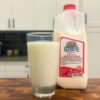



















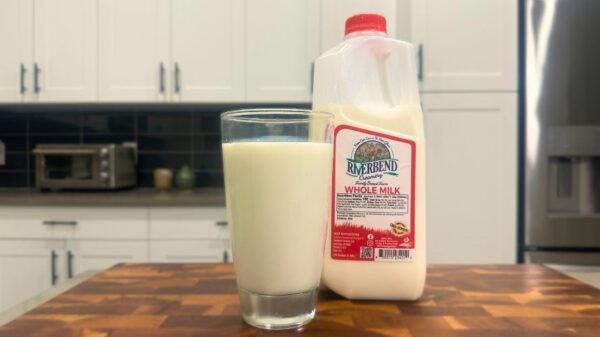






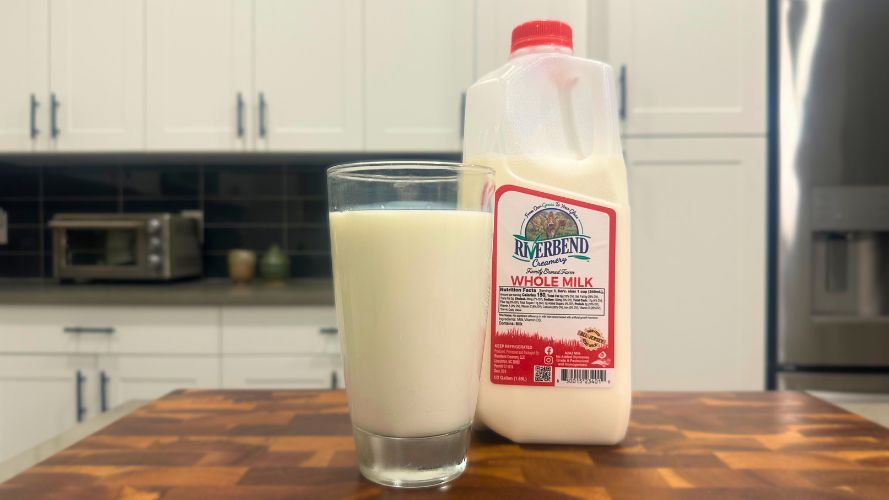
Experts say lactose intolerance affects between 30 and 50 million Americans. Whether it comes with bloating, stomach cramps or the general assumption of lactose intolerance, many people are unable to enjoy dairy products. With A2 milk, there may be an option.
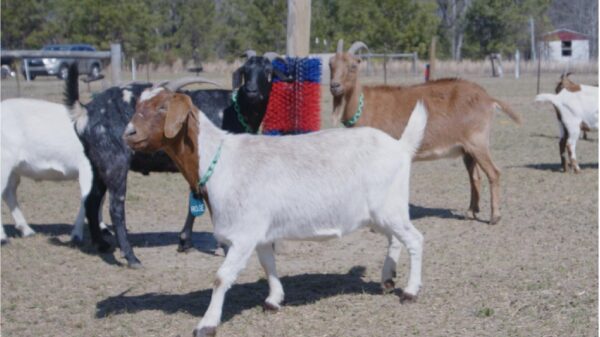
Olivia Miller, co-owner at Riverbend Creamery, runs a farm in Lincolnton, N.C. with a special type of herd that produces milk containing only the A2 beta-casein protein, rather than the more common A1/A2 mix found in most grocery store milks. The difference, Miller says, lies in genetics.
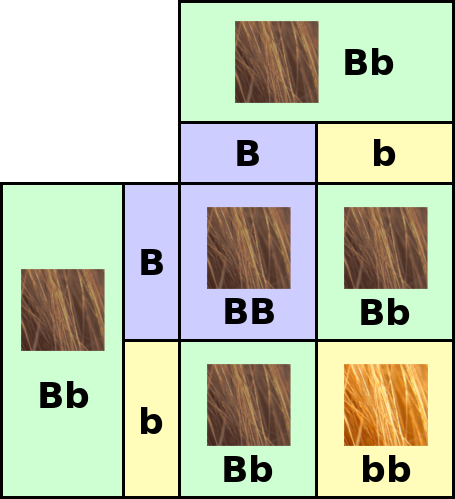
“When dairy cows produce milk, it comes down to a protein called beta-casein,” Miller explained in an interview. “A cow can produce A1, A2, or a combination of both. For the milk to be 100 percent A2/A2, both the sire [father] and dam [mother] must pass down that A2 gene. It’s just like Punnett squares you did in high school biology.”
Milk proteins go to an extremely complex level, but the main distinction between A1 and A2 matters for digestion. The A1 beta-casein can release peptides in your gut that some researchers link to digestive discomfort. On the other hand, A2 beta-casein is believed to be easier on your stomach. Scientists are still researching A2 milk, and nutritionists caution that A2 milk still contains lactose.
“A2/A2 beta-casein protein is just said to be more easily digested,” Miller said. “Now, it is not a guarantee. If someone has a true dairy allergy – like needing an EpiPen – they should absolutely avoid dairy. But for people who think they’re lactose intolerant, a lot of times it’s actually the A1 protein giving them trouble.”
Beyond the possible digestive benefits, the milk from Jersey cows, which is the breed at Riverbend Creamery, naturally contains more calcium, protein and is creamier than Holstein cows’ milk, which is your typical grocery store milk.
The shift to A2 milk is part of a trend seen in Charlotte, where locals want more locally sourced foods. “People want to know where their food comes from,” Miller said. “For us, that means offering a product that’s both transparent and thoughtfully produced.”
Riverbend Creamery began its A2 journey long before opening in 2019. Miller says they started selecting bull sires from A2/A2 lineages about 13 to 14 years ago.
The process was difficult.
Farmers pulled hair samples from each cow, sent them for genetic testing, and sold animals that didn’t carry the A2 gene. “If a cow came back that she did not produce A2 protein, then over time, we sold those cows to other farmers. We only kept the A2/A2 cows and bred them to A2 bulls,” Miller explained.
Their work eventually paid off. “Now, all of our herd is 100 percent A2/A2 producers. And we’ve kept it that way ever since,” she said.
Miller emphasized that this isn’t genetic engineering, but selective breeding.
“We didn’t go in and change their genome. We just bred carefully, like choosing two golden doodles to get the coat color you want. It’s just thoughtful breeding.”
Once the herd was established, the rest of the process stayed simple. “We just milk the cows and put it in a bottle,” Miller said with a laugh. “That’s it.”

Riverbend Creamery milks exclusively Jersey cows, known for their smaller size and higher butterfat milk. The creamery bottles milk on site several times a week and makes ice cream, buttermilk and butter that they sell throughout the region.
Farm tours are available, allowing visitors to see the milking parlor and learn about the A2 process firsthand. For Miller, transparency is key. “A lot of people assume all Jersey cows produce A2 milk,” she said. “That’s not true. Jerseys are more likely to, but you still have to test every cow.”
Miller says they want to be completely true to their label, and that means making sure every cow in the herd is verified.
The A2 milk market is still small, and critics point out that scientific consensus on health benefits remains uncertain.
Riverbend Creamery sees value in giving customers a choice.
For Charlotte families searching for alternatives or simply fresher, local milk, Miller is betting that A2/A2 milk will only continue increasing in popularity.
Queens University News Service stories are prepared by students in the James L. Knight School of Communication with supervision and editing from faculty and staff. The James L. Knight School of Communication at Queens University of Charlotte provides the news service in support of local community news.