
































Through the physical satisfaction of creating a whole life cycle from seed to edible produce or beautiful flowers, gardens have proven to hold value within communities.
When cities experience years of steady growth, people often find themselves with a lack of space to enjoy tending a garden. Food scarcity, lack of community-controlled outdoor space, unmanaged vacant land and smaller yards can all plague urban areas.
Community gardens can prove beneficial, and in Charlotte, they are creating oases of fresh fruits and vegetables.
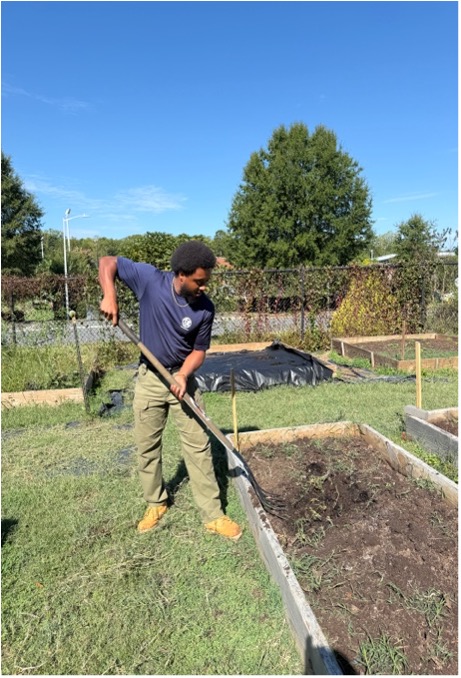
Leon White, a field maintenance and operations assistant for Mecklenburg Parks and Recreation, experienced the problem first-hand. “I was living in an apartment on the side of the building, and in front of me were a bunch of trees,” he says.
Wanting to grow tomatoes and watermelons, his options were limited. Now, he runs the county’s Community Garden program and helps find space for other residents, like himself, to grow all types of plants.
Community gardens were first introduced to Charlotte in the 1970s as a place to foster community growth. Land is dedicated to the gardens typically in local areas owned by Mecklenburg County Parks and Recreation. Gardens are fenced with water and lighting supplied. Raised beds of soil provide clean, accessible growing areas.
Each section of garden is ‘owned’ by a single person, and they are free to grow whatever they want within that designated area. The one rule – they must tend to their own crops and keep the space looking tidy throughout the year. The county does not charge for a plot, but some of the community gardens have a small, voluntary fee each year. Due to the heavy demand, new or existing gardeners are limited to one plot.
White tries to match applicants with their closest garden to keep morale and interest high.
People can be garden captains who help make sure the grounds stay functional and clean for local growers. The garden captain will also arrange days when residents come together along with other volunteers to do menial tasks, like pulling weeds.
Hundreds of requests roll in each year to use an allocated section in any of the 25 gardens in the Charlotte area. Some are ADA accessible. Mecklenburg Parks and Recreation fulfill those requests as spots open.
Numerous benefits
Community gardens have proven benefits. Some edible landscapes in Charlotte are designed specifically to combat food scarcity, and in some cities have reduced gun crime.
In a study by University of Michigan, researchers found that green spaces, including community gardens, have led to a 12% decrease in gun violence rates.
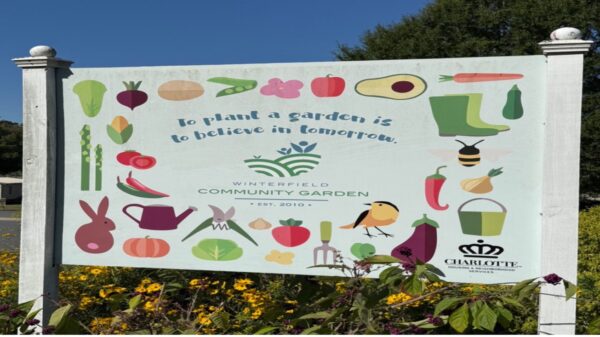
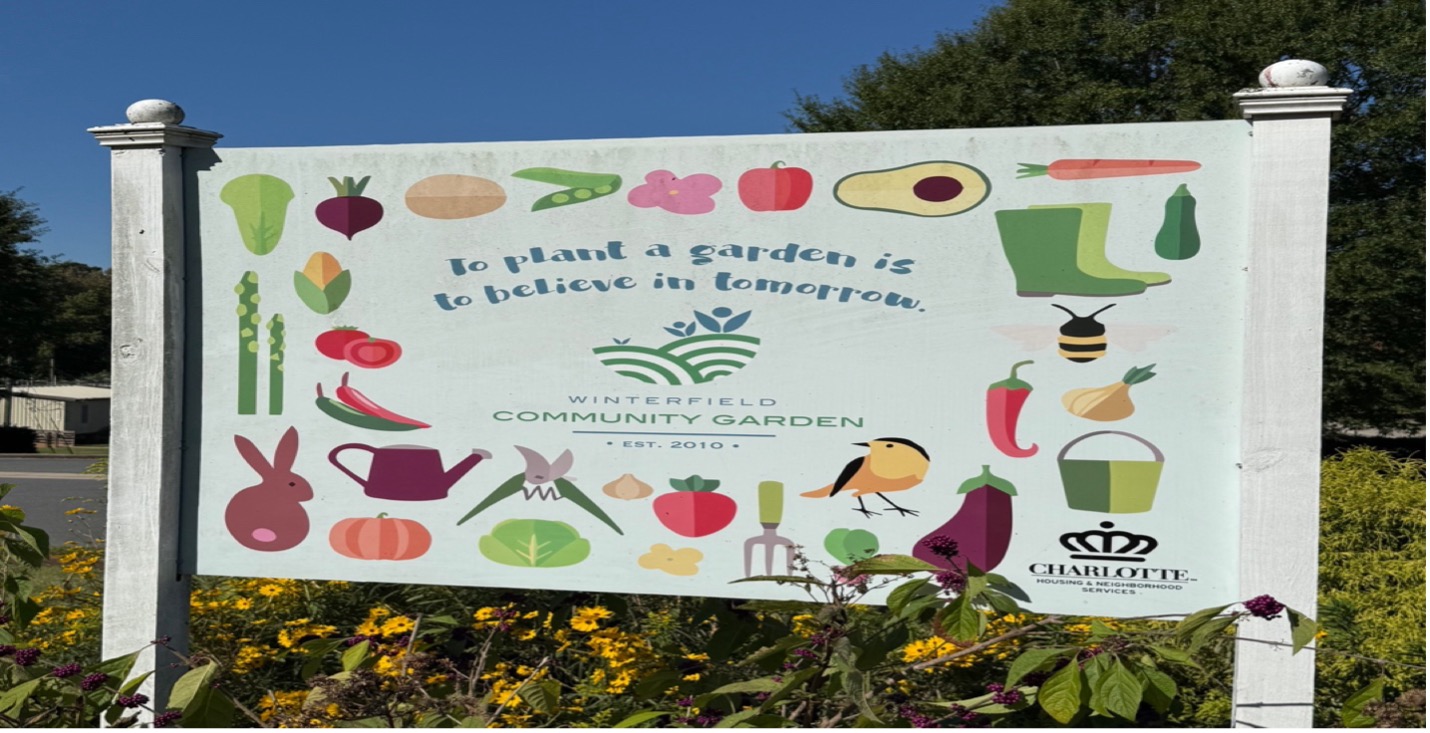
The Winterfield Community Garden across from Winterfield Elementary School in Charlotte is a partnership with the surrounding community and students learn about growing food. On a recent day in September, third grade students helped harvest 111 pounds of sweet potatoes.
The garden also aids a food bank located within the school. Students are taught lessons that pertain to farming and keeping crops healthy and thriving.
White says that he has worked with the director of Zealous Empowering Nurturer, or ZEN, to build a local food stand. “We have a mobile market pantry where we meet people where they are at and provide them with meal kits that aren’t always grown in the garden, but we try to supply fresh vegetables in there,” he said.
White found out about ZEN while on a walk in his neighborhood. Through mutual friends, they ended up working together.
These edible landscapes and services are run by the Health and Human Services Department of Mecklenburg County.
By allowing for an abundance of fresh vegetables and fruit to be grown in community gardens, many local gardeners choose to donate leftover produce to local nonprofits.
A day spent playing in the soil can also improve mental health. Research has shown that spending time outside and gardening is good for the body and the mind. According to Joe Lamp’l, author and creator of joegardener.com, gardening can help you practice acceptance, move beyond the ideas of perfection, develop a growth mindset, connect with others and the world, practice mindfulness, reduce stress, and promote healthy eating and exercise.
Soaking in the sun’s rays and the antioxidants in the soil can chemically help boost moods, White shared. “There is a larger demographic of gardeners emerging called horticultural therapists.”
These therapists have studied the positive effects gardening has on humans and use gardening in their practice to improve mental health. Having something to look forward to and a physical sign of one’s work can increase happiness levels and bring a sense of purpose to humans.
Charlotte’s community gardens attract a diverse group of people. Some have been gardening for years, and some have trouble keeping a house plant alive and want to learn.
At ZEN, White says that people came together around an interest in organic gardening. He compares the connection to the popularity of pickleball.
“I think Charlotte is ranked in the top five cities for pickleball, but it’s just the activity that brings the people together. They find a community in it and keep coming back. Gardening is the same way,” he says.
Queens University News Service stories are prepared by students in the James L. Knight School of Communication with supervision and editing from faculty and staff. The James L. Knight School of Communication at Queens University of Charlotte provides the news service in support of local community news.