





























Schools across Charlotte continue to experience teacher shortages while the demands of the job become increasingly difficult to manage. Local educators point to low pay, heavy workloads and limited support.
“Teachers are being assigned more and more responsibilities, creating unrealistic expectations and a lot of stress,” one teacher told the Queens University News Service. The news service agreed to not name the source for this story to protect them from any retribution.
They also said that they are not getting support from parents or administrators when it comes to discipline and behavior issues.
Students’ behavior, a lack of parental involvement and compensation that does not reflect the workload is the reason many teachers are reconsidering their careers in education.
According to the North Carolina Association of Educators (NCAE), the average starting salary for a teacher in North Carolina is $42,542, which ranks 39th nationally. The state’s average teacher salary is $58,292, placing it 43rd in the nation, $14,000 below the national average.
Over the past year, North Carolina’s average teacher salary increased by only about 3%.
In a Sept. 23 press release, the NCAE called on state lawmakers to prioritize passing a full state budget.
“It’s been more than two months since North Carolina should have had a new budget,” said NCAE President Tamika Walter Kelly in the statement. “That’s two months of lawmakers neglecting educators and state employees. That’s two months of neglecting our students and the public schools that serve them.” The NCAE is calling on lawmakers to pass the state budget that should have been done in July.
At the end of July, the state legislature passed a small spending bill to address enrollment growth in public schools and community colleges, as well as scheduled step increases in salaries for teachers and state employees. However, the bill did not include significant raises for K-12 teachers.
A comprehensive state budget has not yet been passed by North Carolina lawmakers.
The problem is not unique to Charlotte. According to the State Teacher Shortages 2025 Update by the Learning Policy Institute, 31 states and the District of Columbia reported a combined total of 45,582 unfilled teacher positions.
Charlotte-Mecklenburg Schools reported a 97% fill rate for teacher positions at the start of the 2025–26 school year, leaving roughly 243 vacancies, according to an August 2025 report.
In an effort to attract and retain staff, the district has launched a new program, At Home in CMS: H.O.S.T. (Housing Opportunities for Staff and Teachers), aimed at supporting teachers and staff with housing needs. According to the district’s employee housing site, the program provides direct, one-on-one assistance to help employees find housing.
Patrice Petroff, a professor of education at Queens University of Charlotte’s Cato School of Education, explained a series of initiatives implemented by North Carolina to rebuild the educator pipeline.
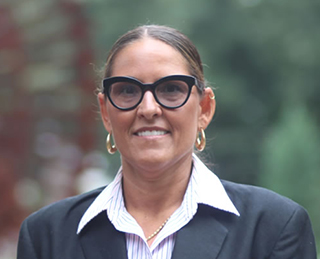
One of these is Teacher Cadet, a high school‐level program that helps build awareness and interest early by introducing students to teaching as a possible career through curriculum and classroom observation. North Carolina has also expanded the NC New Teacher Support Program (NC NTSP), which provides coaching and professional development for early-career educators.
Financial assistance programs such as the NC Teaching Fellows Program offer forgivable loans to individuals preparing for certain hard-to-staff subject areas and provide recruitment grants to school districts. Meanwhile, the Teacher Assistants to Teachers Tuition Reimbursement Pilot helps teacher assistants move toward full licensure by providing financial support for coursework.
Still, significant challenges remain. “Even with these efforts, there are several hurdles North Carolina still faces, which any program will need to address carefully,” Petroff stated.
Many initiatives only serve select districts or subject areas, leaving rural and high-need schools struggling. According to Petroff, teacher preparation program enrollment has declined by about 9% over the past decade and surveys continue to show burnout and workload as major deterrents.
“It’s easier to recruit someone into teaching than to keep them, especially beyond the first few years,” Petroff said. “Induction support helps, but the longer-term environments matter.”
She added that most education majors at Queens University secure jobs before graduation, either through student teaching or previous practicums, but many express concern about burnout, sustainability and limited career growth.

“Factors such as mentorship, practicum and clinical placements, professor connections and job placement services make a meaningful difference in how confident a graduate feels,” Petroff said. “Where those supports are strong, students tend to feel better.”
For Charlotte and schools across North Carolina, strengthening those supports may be essential not only to retaining current teachers but also to encouraging more students to enter the field of education.
Queens University News Service stories are prepared by students in the James L. Knight School of Communication with supervision and editing from faculty and staff. The James L. Knight School of Communication at Queens University of Charlotte provides the news service in support of local community news.