





















Recidivism rates remain high across America and programs that can help reduce those rates are now in jeopardy with federal budget cuts. According to the Council on Criminal Justice, the Trump Administration in April terminated 373 grants from the Department of Justice’s Office of Justice Programs (OJP).
Charlotte has seen a 49% re-arrest rate within the past two years. That’s 10% higher than the national average. Multiple programs in the city assist justice-involved individuals in making a smooth transition back into the world once out of prison. These programs are funded through a mix of different government programs and philanthropy.
Research has shown that risk factors like health, employment, housing, skill development, mentorship and social networks significantly affect the success of reentry. With federal budget cuts and policy changes in the past year, Freedom Fighting Missionaries, one of the local Charlotte reentry nonprofits, has been preparing for the worst as they continue to work with local families.
The Impacts on Housing and Employment
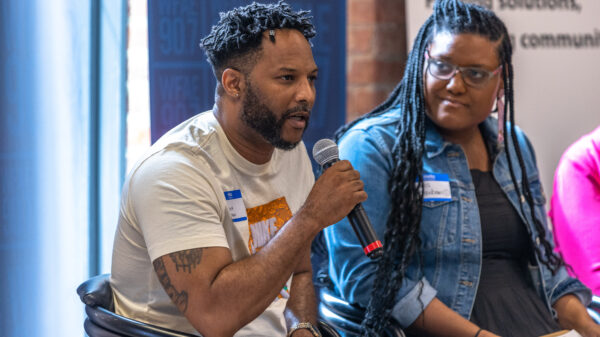
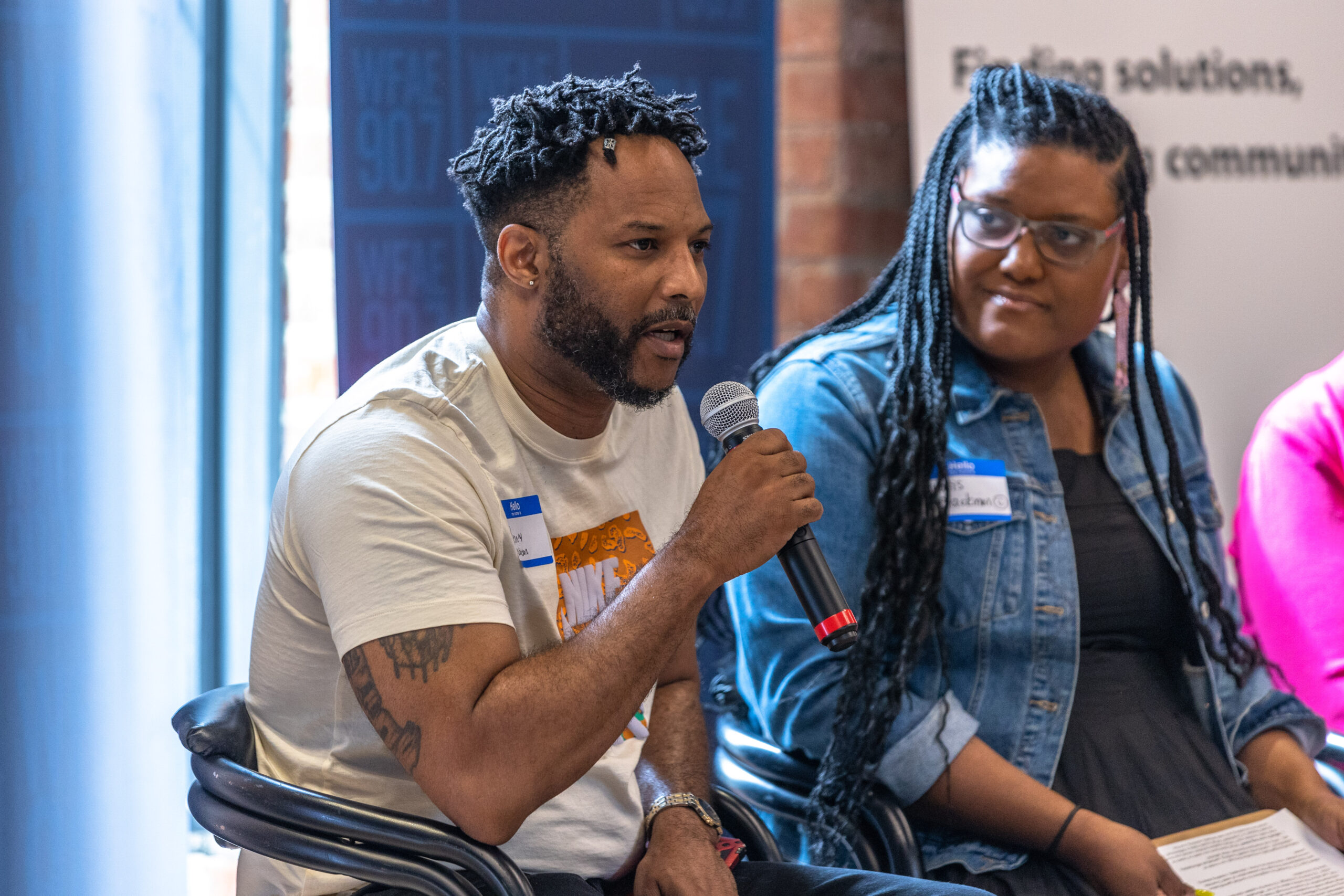
Founded by Kenny Robinson, who himself was formerly incarcerated, Freedom Fighting Missionaries helps those in our community who have been justice-involved by providing paths to build self-sufficiency.
Robinson launched the project in 2020, working hard to get his nonprofit initially off the ground. The organization eventually became the first reentry program in the city to receive Section 8 housing vouchers. In July, they launched a $1 million initiative to help homeless students and their families.
During the past five years, Freedom Fighting Missionaries has expanded to offer a wide array of services to individuals and their families that include assistance with employment, housing and education – all of which could see drastic changes with additional federal budget cuts.
While Freedom Fighting Missionaries’ funding does not come directly from the federal government, Robinson worries that potential cuts could cause a trickle-down effect.
Local governments and private entities that provide funding to local nonprofits like his are expected to have less money from federal grant programs in the coming year, resulting in less resources distributed out to other organizations.The housing vouchers that Freedom Fighting Missionaries currently receives allow recipients to use a smaller percentage of their income for rent and the rest is covered.
“As less affordable housing is available and sustainable employment decreases for the population of people who are not justice-involved, you can imagine what that does to those who do have that barrier,” said Robinson.
The Charlotte area already faces challenges with affordable housing and removing these vouchers could lead to a larger homeless population. Individuals with a criminal history are already 22 times more likely to experience homelessness and any cuts would likely increase that number.
Job training programs could also be at risk. Freedom Fighting Missionaries currently works with other Charlotte area nonprofits, local government offices and trade schools to teach individuals the skills needed to do certain jobs in the market. People in these programs can enroll with partnered businesses to gain crucial job skills like technology training and career readiness.
Freedom Fighting Missionaries also provides referrals to “second chance employers” helping to lead formerly incarcerated individuals to find fulfilling careers. Robinson said having a career provides the purpose an individual needs and discourages future criminal activity.
Recidivism rates typically rise as employment opportunities lessen, though. The unemployment rate rose to 4.6% in November, the highest in four years.
Bright Spots for Youth Education
There are some bright spots. Freedom Fighting Missionaries recently started working with youth that fall under the Mckinney-Vento Education for Homeless Children and Youth program. The U.S. federal law ensures homeless children and youth (under 21) have access to free, appropriate public education by removing barriers like immediate enrollment, providing transportation and offering support for academic success.
Students they work with must be attending a Charlotte Mecklenburg school and have a parent or primary caregiver that is formerly incarcerated, or justice-involved.
While the recently passed funding bill brought deep cuts and eliminations to many education programs and initiatives, this program remains in place and is reportedly continuing at 2025 funding levels.
But, Robinson still has concerns about the shifts in government departments and what that means for these types of programs.
“The Mckinney-Vento Act provides transportation and other services for students,”
Robinson shared, “they anticipate a shift from the Department of Education over to a Department of Labor causing a pause on an increase and some cuts to programs across the board that ultimately impacts the poor and that’s who we serve.”
This act will not go away but the ability to serve the community on a local level could be impacted.
Freedom Fighting Missionaries has used their role as a rental subsidy program through the Foundation for the Carolinas to provide rental subsidies for justice-involved families for two years. Coordinating with staff at CMS to work directly with students that have justice-involved caregivers offers specialized care to children that may otherwise be underserved.
Mentorship and resources are offered to the students as a safety net to get them through these years in their education.
Despite the potential challenges ahead Robinson remains hopeful and steadfast.
The organization looks to break down barriers for individuals and families that are justice-involved. “It encourages me and my staff, and I will support us to hang in there,” Robinson said.
Queens University News Service stories are prepared by students in the James L. Knight School of Communication with supervision and editing from faculty and staff. The James L. Knight School of Communication at Queens University of Charlotte provides the news service in support of local community news.

Shifting Ground is a reporting project from the Charlotte Journalism Collaborative. The series explores how federal policy and funding changes are impacting Charlotte residents, neighborhoods, and organizations — and how communities are responding.
Follow more stories at charlottejournalism.org/shiftingground and join the conversation at upcoming community events.