



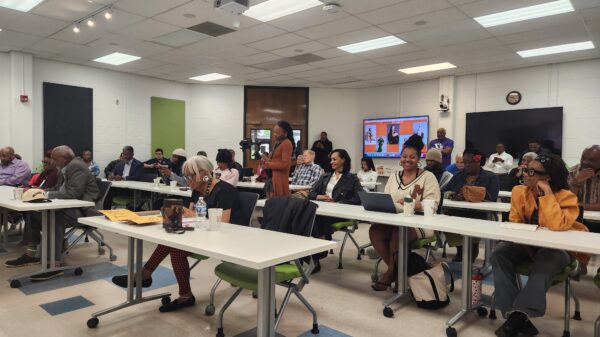


















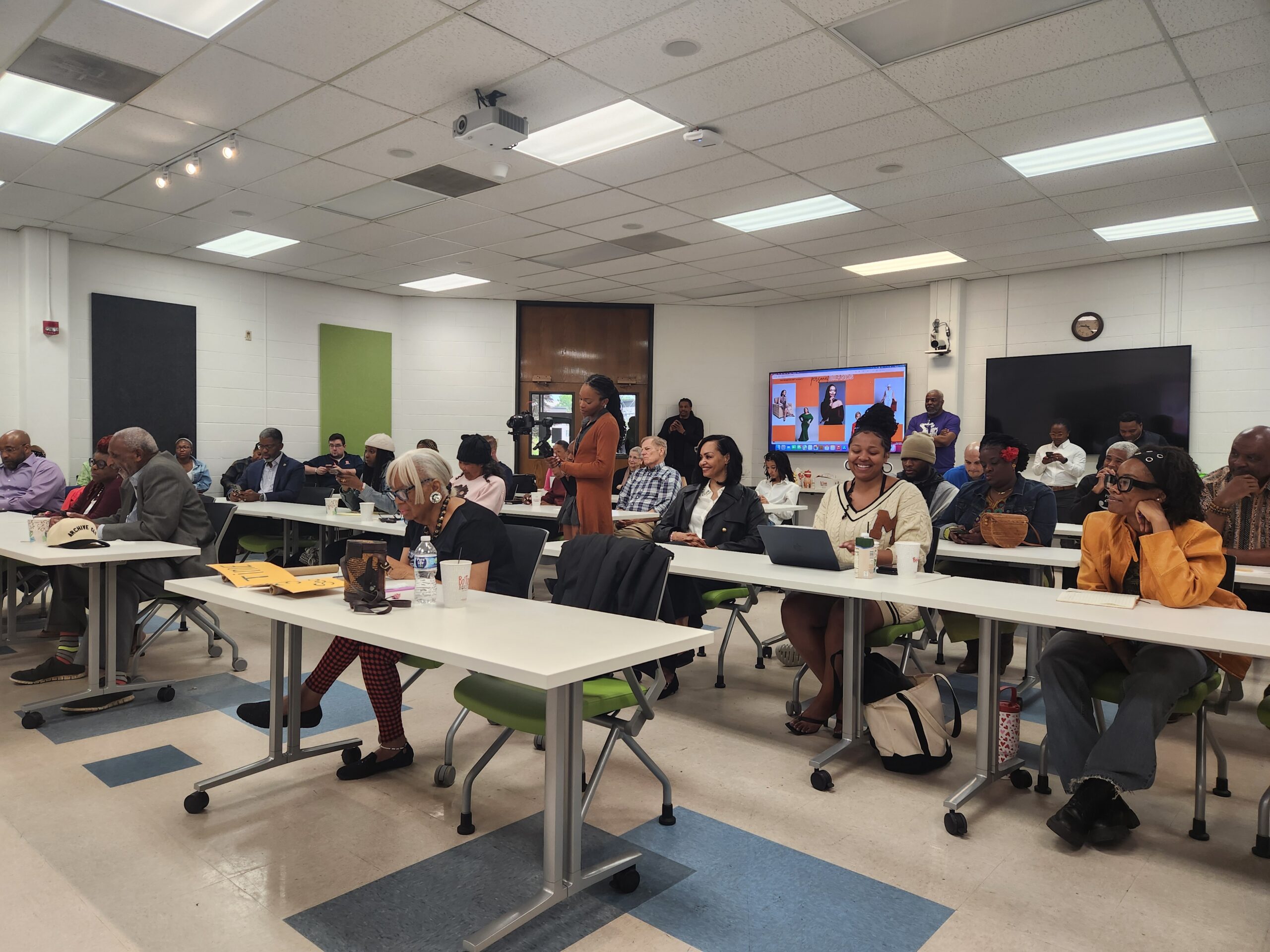
It’s Tuesday morning, and while a piano plays, people walk toward boxes of Bojangles coffee and catch up with friends. At 8:30 a.m., people find their seats and the Sarah Stevenson Tuesday Morning Forum begins. For a few moments, the room is quiet as heads bow in prayer.
Writer and entrepreneur Zhateyah YisraEl has attended the Tuesday Morning Forum for more than 10 years to learn and build connections. “When I first came, I was learning so much about the actual Black history of Charlotte,” says YisraEl, noting the stories and history shared, and the people sharing them. “It’s a forum of mentorship.”
The Forum, as it is often called, is a public meeting held in the Belmont Community Center on Parkwood Avenue every Tuesday. Guest speakers discuss topics that impact the Charlotte’s Black community. Topics run the gamut – from history to arts, and politics. Sometimes the Forum celebrates local Black entrepreneurs building a more thriving community in Charlotte. “I think it’s really important that we capture our story so that they don’t get lost,” Yisrael adds.
On April 21, researchers from UNC Charlotte Urban Institute shared their findings from a study on the news and information needs of Charlotte’s historic West End. This week, presenters will talk about the recent resignation announcement from Mayor Vi Lyles, and attendees will have the chance to say who they think should be appointed to finish her term.
Although the Forum’s discussions have centered around major headlines and sometimes helped create them, little attention is given to the community that keeps it running.
The Forum was founded approximately 50 years ago. In its infancy, Sarah Stevenson, Jim Richardson, Rev. Bob Walton, and Stevenson’s long-time friend Mary Brooks formed the Tuesday Morning Breakfast Forum – later changed to The Sarah Stevenson Tuesday Morning Forum in Stevenson’s honor.
Many who contribute to the Forum view their role as an honor because of the stature of its guests, like Lyles, Willie Ratchford and 12th District U.S. Rep. Alma Adams.
A structure of respect, order and communication
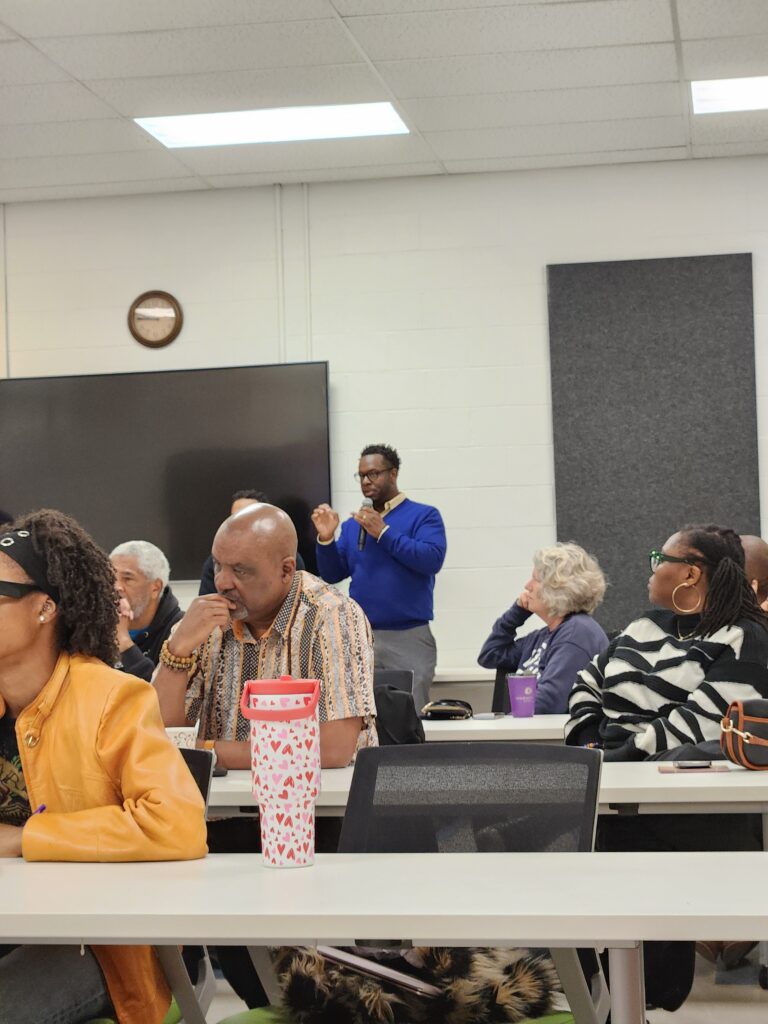
Each meeting begins with a facilitator, or host, who introduces the week’s panelists. Panelists must be concise, explain who they are and what they do in a few minutes. After a panel discussion or presentation, audience members can ask a 15 to 30-second question. A facilitator calls on people only after they raise a hand. Panelists are given time to respond. No one is allowed to ask follow-up questions.
Steve Johnston says, “[The Forum] allows everyone to be wrapped up in something bigger than themselves.”
The ground rules, shared on the Forum’s website, state “Participation in Forums is a privilege sustained by agreement to stay on topic, to treat all participants with respect, and to honor facilitators’ decisions. Violators of this agreement may face immediate suspension of the privilege.”
Johnston has volunteered for the Forum since 2003. Initially, he made coffee runs; now, he runs the website and livestreams – a job he is retiring from this year. Being a strong civil rights advocate for the Black community, Johnston says he prefers to stay behind the camera. “I believe reparations [are] the only way this country is going to get past its miserable racist past,” he says. “So, what do I have to offer? I have time and a teaspoon worth of talent.”
Organizers don’t refer to the Forum as unique but say it is a necessity. Johnston says it takes a lot of energy and tremendous focus to pull off.
The Forum’s first facilitator, Stevenson, demanded order and that sentiment hasn’t changed. The Forum’s consistency has helped create a space where everyone feels welcome.
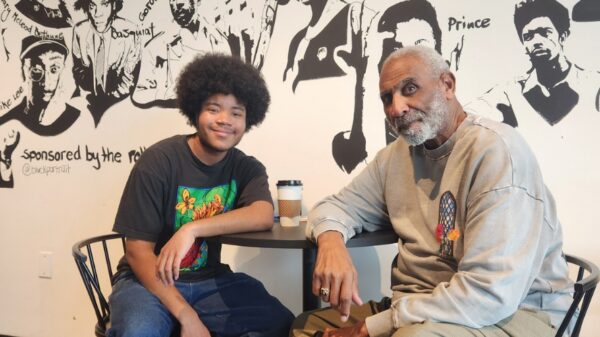
Winston Robinson arrives early every Tuesday. A current facilitator, he takes the role seriously saying the Forum keeps Charlotte’s history alive. He’s a Charlotte native and founder of The Applesauce Group and The Great Westside Fish Fry. He attended his first Forum in 2016 with his father. “I was the youngest person in the room by 20 years,” he said.
Today, Robinson sees how the meetings help shape and inform communities in Charlotte.
As Charlotte continues to grow, community members, especially people of color, fear that Charlotte’s history will be lost. The Forum is a way of keeping that history alive. Robinson explains that it was created for Charlotteans to do something, and it’s not up to the Forum to decide what to do with that information. The goal is to spread that information throughout the community.
Like Robinson, most attendees are invited to the Forum by other members of the community, friends or family. Before facilitating, Robinson worked for GMR Marketing from 2011 to 2012. He traveled across the country until he got older and wanted to spend more time with his father. Robinson knew his father attended the Forum every Tuesday morning, which fit perfectly into his schedule. The two attended every Forum until his father grew ill.
In time, Robinson realized the wealth of knowledge that sat around him.
“Again, my goal was to spend time with my father, and I end up spending time with a lot more extended parents,” he says. “That’s such a beautiful thing – the wisdom, the things I learned, the stories, it’s so much contextual knowledge I can’t pay for.”
Robinson says that the Forum fosters connections that last a lifetime.
Sarah Stevenson presided over the meetings for decades. As her health deteriorated, the Forum needed a new facilitator. Co-convener Laura McClettie noticed Robinson’s consistent attendance and asked Stevenson if he could fill her role as facilitator. Initially, she was hesitant, explaining that men didn’t have the right temperament and were too boisterous. But McClettie believed that Robinson’s youth and decorum could benefit the Forum, and Stevenson agreed.
“One week led to another, and now I’m a facilitator,” Robinson explains.
All volunteers in one way or another were appointed to their roles by Stevenson. Each of them respects her contributions to Charlotte, and, like her, hope the Forum continues to thrive. But as the city grows around them, many wonder how the changes in Charlotte will impact the weekly gathering.
Robinson says, “I have an opportunity to shape the lived experience for a group of people, and do my part to make sure there’s a version of Charlotte where my 8 and 3-year-old sons can engage, navigate and be successful.”
Many of the team involved in the Forum agree and believe that Charlotte’s growth is an opportunity. Because of social media and the ability to livestream the Forum, average attendance increased dramatically in 2025.
Robinson notices the renewed interest in the Forum. He says that Stevenson’s legacy flows through the Forum and has a message to anyone who wants to attend: “You won’t be disrespected, you won’t be berated, you’ll have your dignity.”
As the city grows and sometimes feels less connected, the Forum continues to create lasting community and a shared history.
The Sarah Stevenson Tuesday Forum meets in the Belmont Center meeting room at 700 Parkwood Avenue from 8:30 to approximately 10:00 a.m. every Tuesday morning.
Queens University News Service stories are prepared by students in the James L. Knight School of Communication with supervision and editing from faculty and staff. The James L. Knight School of Communication at Queens University of Charlotte provides the news service in support of local community news.