As public funding for nonprofits shifts at the local and national level, arts organizations across Charlotte are beginning to feel the effects through tighter budgets, reduced programming and growing uncertainty about what comes next.
The arts play a vital role in shaping Charlotte’s cultural identity. Artists create spaces for storytelling, reflection and connection, while also contributing to the local economy by drawing audiences to performances, exhibitions and events.
A recent report found that approximately 30% of Charlotte-area nonprofits lost public funding in 2025, with an average loss of 29% of their annual support. While these figures reflect the sector as a whole, arts organizations, many of which already operate with limited financial margins, are particularly vulnerable to these changes.
For arts nonprofits, public funding often plays a foundational role. It helps sustain productions, educational programming and outreach initiatives that make the arts accessible to a broader community. Without consistent funding, organizations may be forced to reevaluate priorities, reduce offerings or even delay planned projects.
“In general, the arts sector has always struggled for funding,” said Mitchell Dudas, president of the board of directors for Charlotte Center for the Arts, via email. “In particular, we are now seeing cuts at the national level which inevitably trickles down to the local level.”
Dudas said that many organizations have had to make serious changes. “For us, this mostly limits our ability to add programming and reach new audiences with our efforts, but so many of our peer organizations have had to cut existing programs and significantly reduce their operations as we see historical available funding being stripped away,” he said.
The impact of funding cuts can be both immediate and far-reaching. Productions may be postponed or canceled, and classes or workshops may be offered less frequently. Community outreach programs, especially those designed to serve schools, youth and underserved populations, can become more difficult to maintain without stable financial support. In many cases, community-based arts education initiatives are also at risk of being reduced or eliminated altogether as funding becomes less reliable.
Smaller organizations often face the greatest challenges.
Unlike larger institutions, they may not have substantial financial reserves or large donor bases to rely on during periods of instability. As a result, even modest reductions in funding can have significant consequences for their ability to operate and share their work with the community.
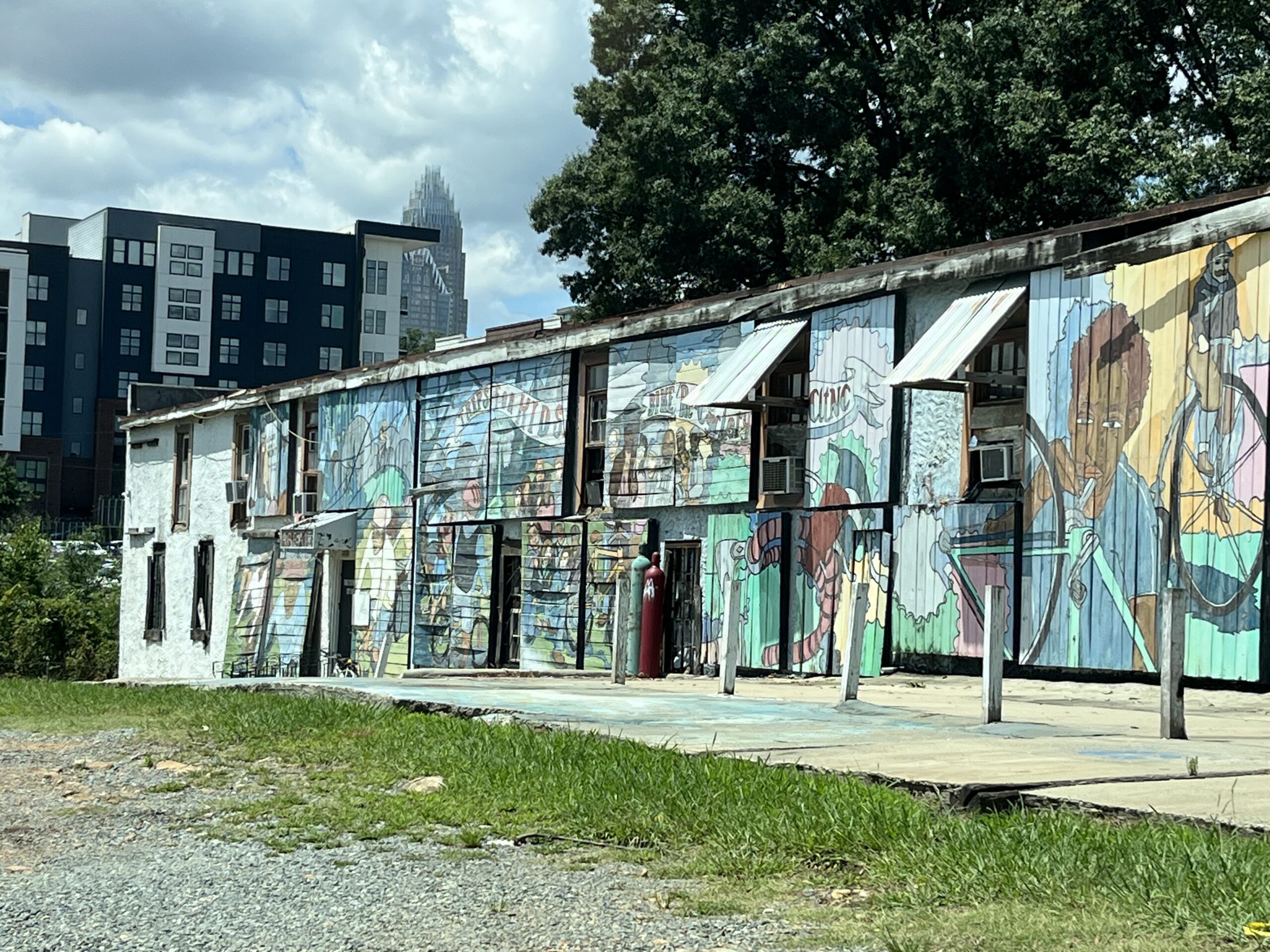
“Our avant garde performance series was recently NEA-funded, and it’s not happening this year,” said Amy Bagwell, director of Goodyear Arts, in an email. “That said, we’re small and very fortunate to have operating support from the City of Charlotte. I do worry about our colleagues in the arts.”
Even if funding is restored at the national level, Bagwell worries what we, as a community, will have lost.
Beyond individual organizations, these changes affect the broader Charlotte creative community. Artists, educators and administrators who depend on nonprofit work may encounter fewer opportunities for employment, collaboration and creative development.
Teaching artists may see fewer classes offered, while administrators and support staff may be asked to take on expanded roles as organizations acclimate to limited resources.
For many, this can mean increased instability within an already competitive professional field.
Audiences, in turn, may find fewer accessible entry points into the arts, whether through live performances, exhibitions or community-based programming.
Arts & Science Council launched the Community Connector Grant earlier this year to specifically broaden participation in arts and cultural experiences and remove barriers to engagement across the community. Grants were available for nonprofits and invidual artists. Grant awardee announcements are expected soon.
Charlotte arts organizations are also actively adapting to the challenges.
Some are increasing their focus on fundraising efforts, while others are forming partnerships or seeking alternative sources of revenue. These strategies often require additional time and resources, making it more difficult for organizations to sustain their core programs.
As public funding becomes less predictable, community support is taking on a more central role. Support from local residents has never been more important, whether it be from direct contributions and volunteering, or attendance at performances and ticket purchases.
For many organizations, increased attendance alone can make a meaningful difference. The demonstrated value from ticket sells or registrations can be an important factor in future funding decisions and to advocacy groups.
Small, consistent actions play a critical role in sustaining the arts, especially during times of financial uncertainty. Choosing to see a show, enrolling in a class or sharing an event directly supports the organizations and artists behind these experiences.
As arts organizations continue to navigate these changes, the relationship between the community and the arts may become more important than ever. That relationship will help determine which programs, performances, and creative opportunities remain part of Charlotte’s cultural landscape.
Queens University News Service stories are prepared by students in the James L. Knight School of Communication with supervision and editing from faculty and staff. The James L. Knight School of Communication at Queens University of Charlotte provides the news service in support of local community news.