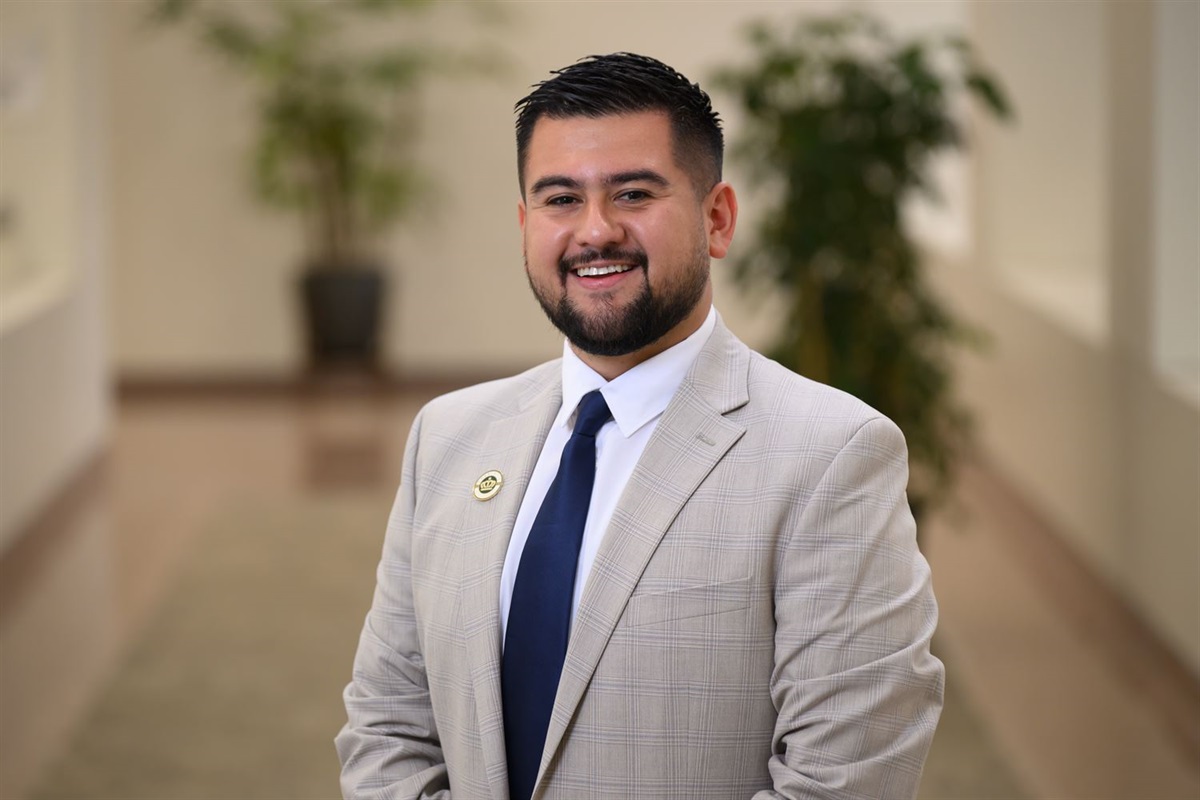
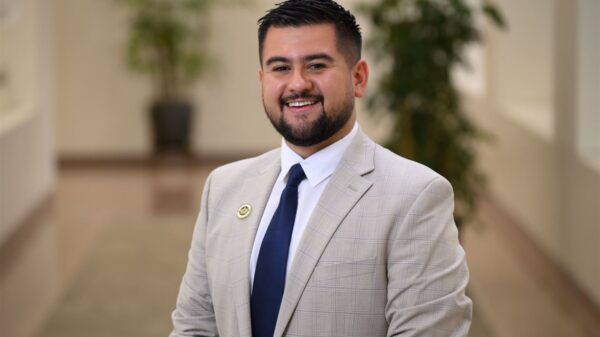
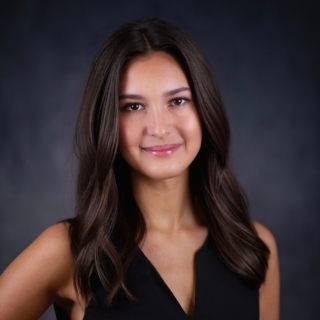
“I grew up in a working-class family, and I’m still very much working class,” says Councilman Mazuera Arias.
The 27-year-old J.D. Mazuera Arias is the youngest member of Charlotte City Council, and the first Gen Z, Latino and formerly undocumented person ever elected in the city. Mazuera Arias grew up in low-income housing, in a mixed-income community, in East Charlotte. “It really has shaped and massaged the way I think about this role in city council,” he said.
After one of the closest primary elections in the city’s history, Mazuera Arias became the Democratic nominee for District 5 on the eastside of Charlotte, beating out the incumbent by less than 1%. He took office on December 1, 2025. There was no Republican in the race.
Queens University News Service sat down with the councilman last month to learn about his path to public service and what’s next for the Gen Z-er. Some light editing has been done for length and clarity.
How has your experience growing up in Charlotte shaped the way that you approach leadership now?
I grew up in an area that is fundamentally an area where, regardless of your race, ethnicity, religion, sexuality or gender, you are working class. You are living paycheck to paycheck. You are deciding whether to take your kids to get their annual physical and their medications or providing a decent meal to your family at the end of the day, or paying rent.
It is a community that has always taken care of themselves because our systems and the policies put in place do not take care of them. They have been often forgotten, unheard and unseen, whether intentionally or unintentionally.
And I grew up around the most lovely, humble, hardworking, intelligent and joyful people.
Despite the circumstances we all were living in or had been living in, they always found joy in a lot of things. And, so to me, I bring that perspective of growing up in a working-class family – of growing up around diverse people, diverse backgrounds, of growing up in an environment with a culture where we looked out for each other – to city council. Oftentimes, those voices fall through the cracks of the decisions we make.
What was a moment that made you decide “I’m going to run for office”?
It was a culmination of a lot of things, but I think it was a conversation that I had with a constituent where I sat with them and they asked me, “why don’t you want to run?”. I was hesitant because I had just moved back to Charlotte a few months before in September 2024, after being gone for 4 years. Then in April of 2025, I launched my campaign. So, essentially, only six months of me being back. But I made the decision around January.
I had sat down with the constituent who told me all these things that had gone on that made East Charlotteans feel forgotten about.
I heard people say that they had not seen as many infrastructure projects and not as many economic development opportunities coming to East Charlotte. The land from the only economic engine it had for a decade – Eastland Mall, which closed down in 2010 and was demolished in 2013 – sat empty up until last year. Even to get to that point last year, there was so much contention and disagreement with Council about what they wanted to do.
And so, that lack of a receptive representation matters.
Some people didn’t even know who their council member was, some people felt ignored, some people felt minimized by council members, disrespected by council members. That idea, for me, was really motivating.
Thinking back to your education and time in school, when you were a student in Charlotte, did you think that this was a career path for you? Or what did you think you would be doing?
I always thought I was going to work in the background.
I’ve always had political aspirations, but for me, it’s not about ego. It’s not about being the person delivering the message. It’s not about raising my hand and having a vote. It’s always been about moving the needle forward for working class communities, for marginalized communities, for our most vulnerable people in society.
And so, I always thought I was going to be behind the scenes, whether working on campaigns, working on the Hill and advocating on behalf of people, really getting into the weeds of things. I never intended to sit in the [seat] of the person making the decisions. I always thought I was going to be influencing these decisions, whether it was through a nonprofit, an advocacy group, a think tank, a lobbying firm, as a legislative assistant or senior legislative staffer.
Maybe, I thought, at one point when I would be in my thirties or forties that I was going to run for office. But never as a 26-year-old running for office. And I turned 27 during my campaign. I’m about to turn 28, so I never really thought that as a 26-year-old I’d be running my own political campaign.
What advice would you give to undergraduate students who are interested in politics or public service?
Every opportunity is a stepping stone for the longer term.
Some advice that I would give, that I wish I had given myself (and advice that one of my mentors gave me) is that you’re not married to your job. Here’s the thing, right now a lot of employers don’t look for the hard skills. They look for the soft transferable skills, right? Anybody can be taught to do anything. What people look for is if you fit the culture, if you have the right people skills, if you can amount to the soft skills that a lot of folks can’t be taught.
Take many opportunities and do not limit yourself. It is good to have your North Star and granularly think about that specific thing that you’re good at and that interests you. But ultimately, do not deprive yourself of the opportunities even if you think it’s not the exact opportunity you’re working for.
You’re the first Gen Z member on Charlotte City Council. What issues do you think older leadership is overlooking that Gen Z is prioritizing?
Well, I spoke about this on the dais last night (and I posted the video on my social media), where I expressed to my colleagues how frustrated I was with them at the lack of action they had, or the lack of wanting to do something.
I think one of the biggest things is delivering results fast.
I think that oftentimes, older generations are more amenable to waiting on things. I think that our generation is not. We have faced multiple wars. We have faced a global pandemic. We are facing a housing crisis, a healthcare crisis, a student loan debt crisis, an attack on our fundamental freedoms and rights as individuals – whether you are a woman fighting for reproductive rights, whether you’re a member of the LGBTQ+ community (particularly our transgender brothers and sisters fighting for the right to exist), whether you’re an immigrant fighting for due process and the right to be in this country – I can go on.
We are at a defining moment in our country’s history where the younger generation is inundated with one crisis after the other while also trying to simultaneously keep up with their jobs and live paycheck to paycheck to pay their rent. In a country that we are seeing record profits to private companies and large corporations, and not a single inch moving towards better wages, safer working conditions and better benefits to working people. We are seeing where the rich are getting richer, the poor are getting poorer, and the middle class is slowly disappearing.
I’ve always said, I always appreciate my colleagues for getting us to where we are today but the problems have changed. The solutions to the problems have changed.
We need to become more creative, and I think, ultimately, these will always be the tough questions we need to ask ourselves. Are we doing enough? Can we be more innovative? Can we be more creative? Can we provide more sound, humane, community-first, people-first, solutions?
Especially, when our federal government is failing us, and especially when our state government is failing us, we are still the only state in the entire country to have not passed a budget last year to fund our priorities this year.
When you have the federal government failing us and the state government failing us, our local governments are the last line of defense. And I think all those issues, combined, uniquely positions Gen Z to be the generation that wants less talk and more doing.
Your identities as a Queer, Latino, Gen Z, immigrant obviously shape your platforms. How would you say that it shapes your experience with leadership?
Fundamentally, a lot of it is based on the systems and the institutions that were built, right?
This is a role where you get paid part-time. Talking about the affordability crisis, you’re not going to get a lot of young people, or Black and Brown working people to fill these jobs that require this type of time, demand and execution. That being said – I think that for me, it’s because I’ve lived these experiences that uniquely places me.
We have a colleague on council who yesterday, when talking about the I-77 South Express
Lane expansion, compared the Civil Rights protestors of the 1960s to the protestors of the I-77 South Express Lanes. [They suggested] that we, as council, do not have responsibility to do the bidding for them. Then, why were we elected?
Developers didn’t elect us. Engineers didn’t elect us. Institutions did not elect us. Corporations did not elect us. What elected us were the people on the ground – the people who go out and vote. And in the city of Charlotte, predominantly Black and Brown people who go out and vote during the municipal primaries and general elections.
We have a responsibility to them. And I think when you have a council member who lacks the lived experience of working-class individuals, regardless of their race, ethnicity, religion, sexuality, or gender, they lack that additional empathy, that additional humanization. Human [understanding] of what people are actually experiencing day in and day out.
My lived experiences as a Latino, as a queer person, as a formerly undocumented immigrant, and most importantly, as a working class individual, informs me about not only my lived experiences, but the lived experiences of the people that raised me. And I think that sometimes, [that is] what’s lacking on city council.
When you think about the legacy you want to leave in Charlotte, what does that look like?
When I lived in New York City, I had a conversation with my partner about what it would mean for us to move back to the city of Charlotte. We knew if we moved back home, we were going to stay, and it would be for the long run. And we thought about our mission – what is our North Star?
What motivated us is that we would come here and be what we didn’t have growing up. [We would] be the role models, the mentors of other young, working-class individuals, but particularly, for us, what was really important – queer Latinos. Growing up, we didn’t see that representation. And representation only goes so far, if the representation is actually doing something. I oftentimes say not all “‘skinfolk are kinfolk.’” Right now, we have the first Latino secretary of state, Marco Rubio, which represents a demographic – my demographic – Latinos. Yet, he is sitting there overthrowing and invading foreign countries and deporting his own people. So that representation, to me, does not matter because it is being used for a negative.
However, when I think about my legacy – I think that I want to inspire working people [to know] that their voices matter, that they have a seat in these institutions that weren’t made for us – that weren’t made for Black and Brown people, that weren’t made for working people, that weren’t made with immigrants in mind. They were made to keep power out of the reach of the people in which power impacts the most, which decisions impact the most.
For me, ultimately, my legacy is that the people most impacted by policy should be the people making the policy. And then we get to inspire a generation of young people who might be telling themselves, “‘I can’t do this,”’ but then can search up my name, or my partner’s name, or whoever in our community and say “‘Wait, if they could do it, I could do it too.”
Is there anything else you would like to add?
The one thing I would add is that Queens University of Charlotte was critical in forming where I am today and helping me get to where I am today.
It was (at) Queens where I fell in love with politics and policy. It offered me my first internship in a political campaign. It allowed me to found the College Democrats of Queens University (or more so, reactivate it after it went dormant for many, many years). I was able to host a Sheriff’s Candidate Forum at Queens at the time and bring nationally renowned advocates. I brought candidates like Jeff Jackson and Dan McCreedy (who ran for Congress), and all these other politicians to campus to speak to students.
When we talk about my trajectory, my journey in politics and in public service, it could not have happened without Queens. And it could not have happened without Queens’s North Star, its motto: Not to be served, but to serve. And to me, that is ultimately my biggest “why.”
Queens University News Service stories are prepared by students in the James L. Knight School of Communication with supervision and editing from faculty and staff. The James L. Knight School of Communication at Queens University of Charlotte provides the news service in support of local community news.