




Connect with us

Hi, what are you looking for?
Community

Voces de Charlotte brings local community together after Charlotte’s Web
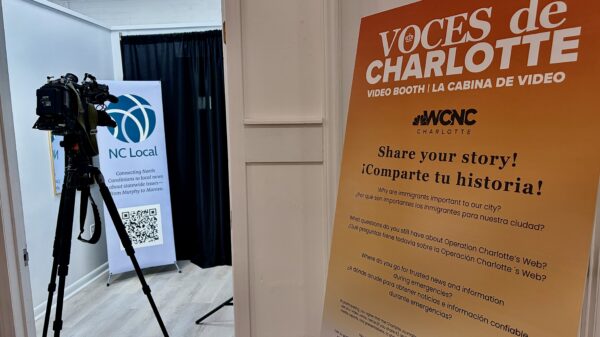
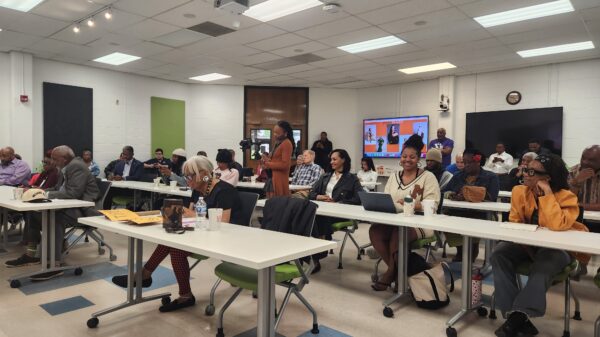
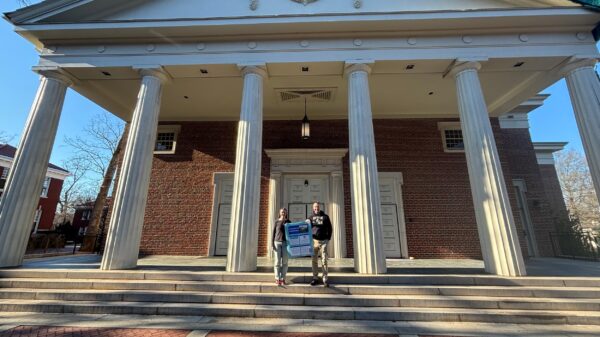
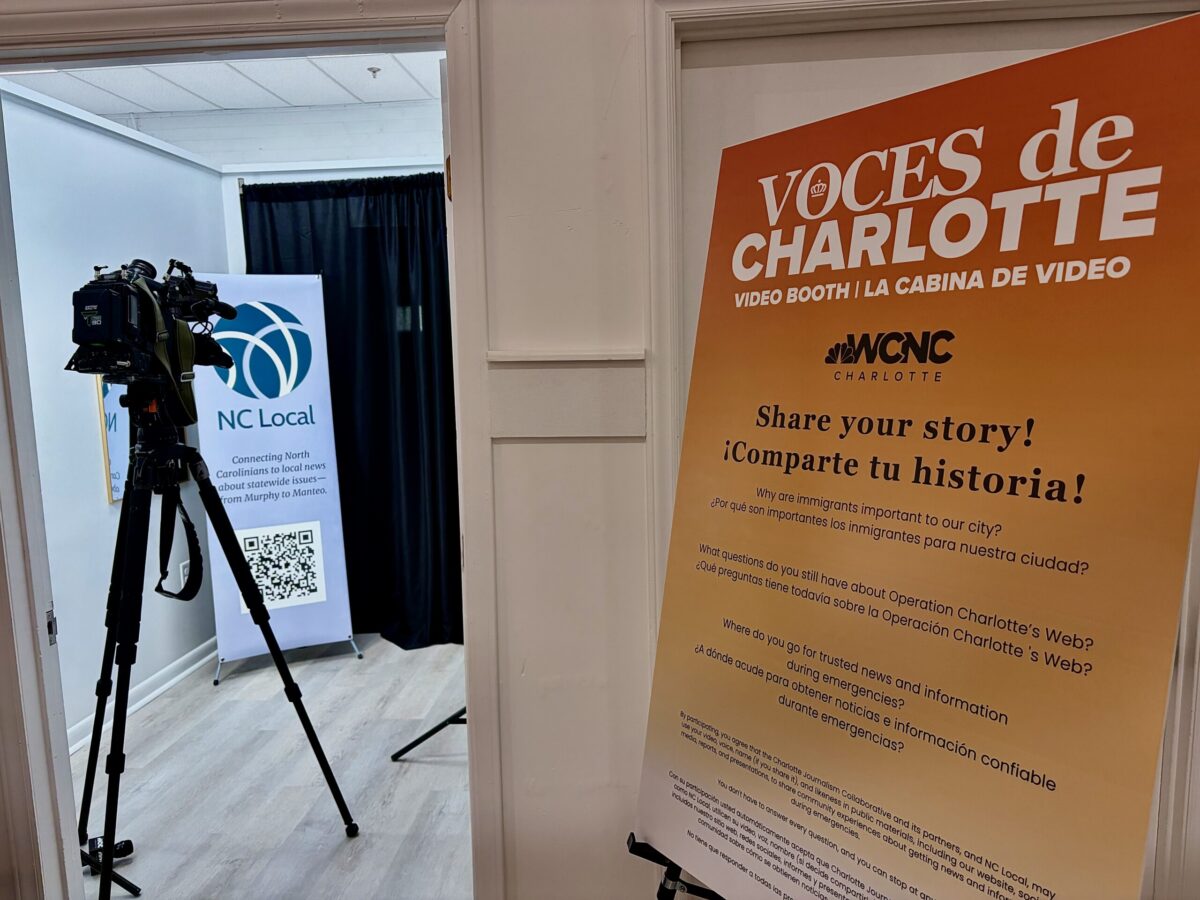
A poster and video camera at the entrance to the Voces de Charlotte event on Oct. 1.
Voces de Charlotte brought together local journalists, community members, social leaders and experts in early October. Photo by Juan José Ramírez Estrada.

CHARLOTTE, N.C.— Voces de Charlotte summoned journalists, community members, social leaders and experts to discuss the lasting effects of Operation Charlotte’s Web on the local community on October 1.

The storytelling event, hosted by the Charlotte Journalism Collaborative and NC Local, took place at La Noticia’s Sterling Events Venue. The evening centered on stories of resilience and impact through five journalist-led panels that brought together people on the front lines of the operation’s aftermath to address what comes next for the local community.

Panelists included Stefania Arteaga of the legal services nonprofit Carolina Migrant Network; Giovanna Torres, founder of Cine Casual, an organization that uses Latin American cinema to create community connections; immigration law experts; and leaders from the Latine Justice Alliance and the Latin American Coalition. In conversation with local journalists, they explored topics ranging from locating detained loved ones and navigating immigration court to finding trusted community resources and using the arts as a tool for healing and rebuilding.

Despite the different topics discussed, all panelists seemed to agree that fear and anxiety continue to linger in the community.

“We had to be mindful and very strategic because we wanted people to understand that this was a safe space together,” said Shardae Brown, director of the CJC, referring to the logistics of organizing the event.

The CJC and NC Local established a detailed plan to address security concerns that could rise around Voces de Charlotte. Therefore, the location was not publicly disclosed until a couple days prior to the event. Each person who registered was verified by the organizers, allowing them to keep a record of who exactly was in the room.

The event also included both Spanish and English live interpreters, as well as speech-to-text captioning for every panel so that everyone could participate in the conversation regardless of language.

“We wanted to curate a space where people could freely come and feel comfortable, but also freely speak and freely listen,” Brown said.

About Operation Charlotte’s Web

Operation Charlotte’s Web was the major deployment of United States Immigration and Customs Enforcement and U.S. Customs and Border Protection agents targeting Charlotte and its surrounding areas in November 2025. ICE reported more than 1,300 arrests during the operation. Federal officials stated that the operation aimed toward undocumented immigrants with criminal records. But according to an NC Local analysis of 1,100+ verified arrests during the operation, only 30% of individuals arrested between Nov. 15-Dec. 31, 2025 had been priorly convicted of a crime, 37% had pending charges and 33% had no criminal record.

The operation involved heavily armed, masked agents in unmarked vehicles operating near apartment complexes, churches, Home Depots, and public schools. This drew criticism from local officials, and prompted economic upheaval, an unprecedented increase in public school absences, and social unrest.

Lingering fear

“It definitely hasn’t been the same since, nor will it ever be the same again,” said Alba Sanchez, manager of the Family Wellness Center for the Latin American Coalition. According to Sanchez, many families have avoided going out and exposing themselves and remain afraid to relive the pain, fear and hopelessness they went through during the operation.

“Many Latinos no longer shop at Latino stores, which affects businesses, and this, in turn, affects workers because businesses have to let them go,” said Yuliana Montiel, reporter for La Noticia. “It’s a chain reaction that’s still going.”

For Sanchez, healing begins with open and honest conversations, with telling the stories that people in the community still find difficult to articulate.

“If we don’t tell the stories of what we are going through, then it didn’t happen,” said Torres of Cine Casual during her panel.

Events like Voces de Charlotte are a great platform not only to amplify those stories, but also, as Montiel noted, to build partnerships between media organizations that can cover and give an outlet to the voices of the community.

“In the end, we serve our community and, if we fail them, we are denying our community the opportunity for visibility,” Montiel said. “We are failing the people that count on us.”

*Most interviews were conducted in Spanish and translated to English as faithfully as possible by the reporter for this story.

Queens University News Service stories are prepared by students in the James L. Knight School of Communication with supervision and editing from faculty and staff. The James L. Knight School of Communication at Queens University of Charlotte provides the news service in support of local community news.

  • Juan José of Medellín, Colombia, is a Communication major in the James L. Knight School of Communication at Queens University of Charlotte. Juan is also part of the editorial staff for the 2026 edition of QUEST, Queens University of Charlotte’s undergraduate research journal.

    View all posts

You May Also Like