
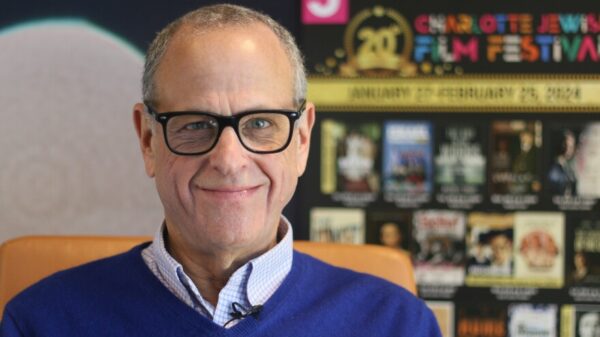


















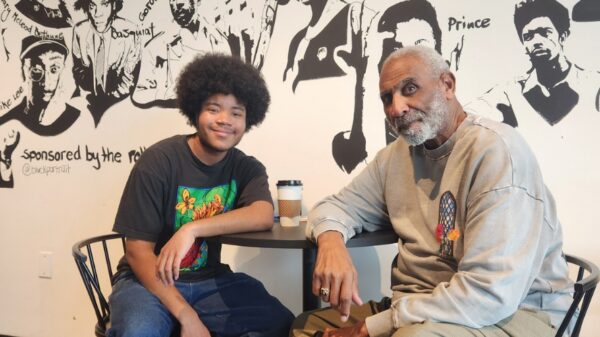




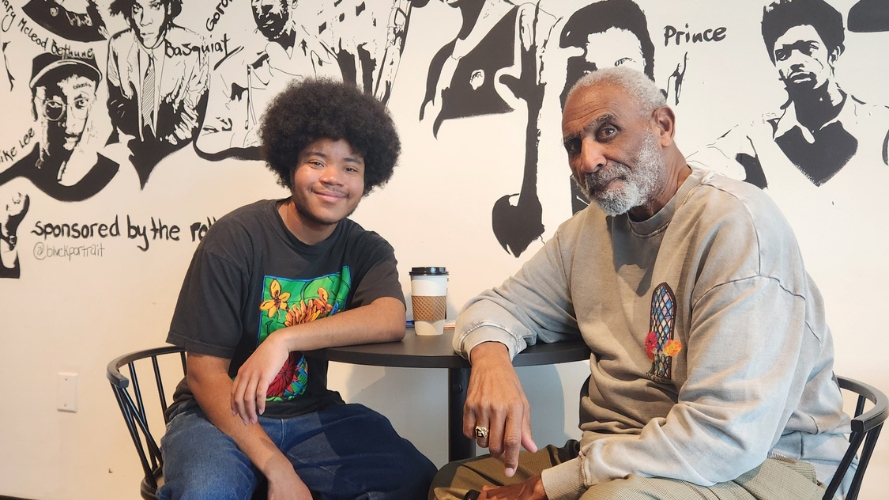
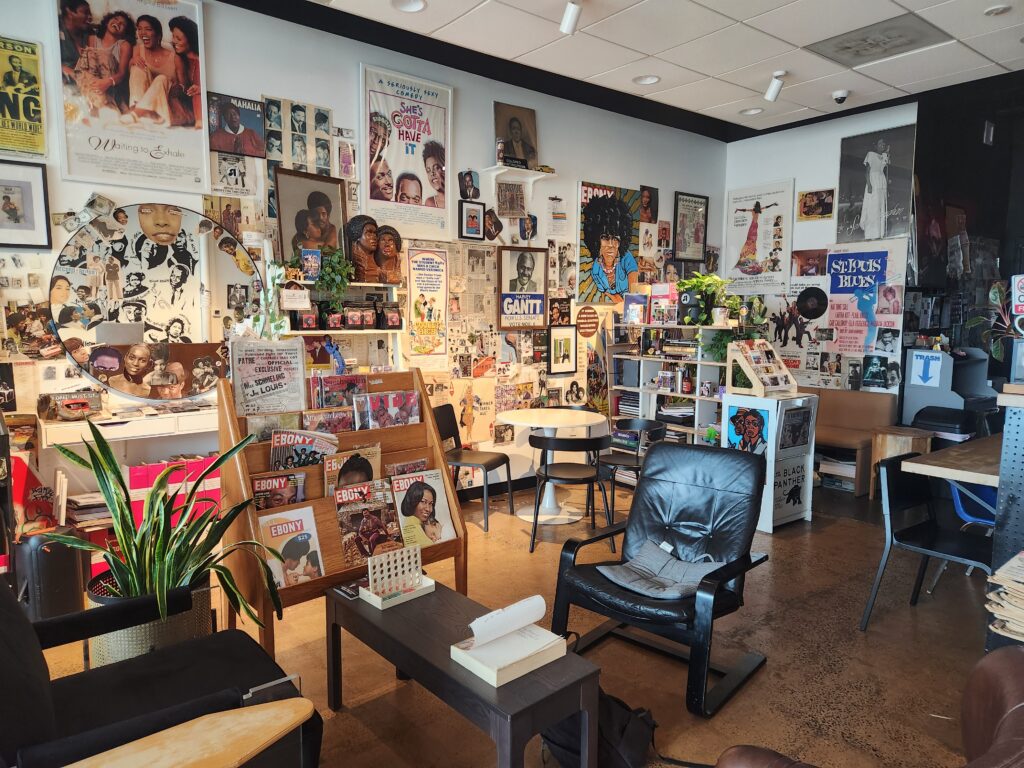
Ken Koontz can often be found talking with people of all ages inside Archive CLT or taking part in the Sarah Stevenson Tuesday Morning Forum where he always gets a seat on the front row. At the age of 77, Koontz hasn’t stopped searching for stories. In February, the legendary Charlotte reporter brought alleged predatory towing to the attention of reporters at Queen City News.
Koontz was born and raised in Texas, but his mother was from Charlotte. His parents played a major role in his upbringing. His father was a principal and teacher, later moving the family to Beaumont where Koontz attended Hebert High School.
Koontz played sports in school, spending much of his time on the baseball field.
Following graduation in 1967, he went to Lamar State College of Technology (now Lamar University). It was the late 1960s and Koontz could feel the energy shifting as racial unrest grew on the campus. Martin Luther King, Jr. had been assassinated in the spring of 1968, and local organizations of Black Americans grew into national movements surrounding an increased distrust of organizations like Lamar that was a predominantly white campus.
The growing movement and tensions led Koontz to transfer to Johnson C. Smith University in Charlotte where he had community and knew he had family nearby. His aunts, uncles and older sisters had all attended. Koontz found the support he needed from professors and family members, who also provided him a place to live while he completed his studies.
Dr. Lionel Newsom, president of Johnson C. Smith University from 1969 to 1972, helped Koontz get his first part-time job broadcast news at WBTV. Koontz would become the Charlotte station’s first Black reporter and part of a handful of Black reporters in the city.
“I was beyond green, unseasoned,” says Koontz. He had worked in radio for about four years, but he had barely written stories and had little experience in TV broadcast journalism.
Koontz recalls early news coverage of the Greensboro Massacre. There he witnessed the effects of white supremacy on the community and the importance of visibility. After being thrown into public unrest, Koontz searched for more. But his journey as a young reporter was not an easy one.
Koontz quickly realized that his appearance as a Black man mattered. The team at WBTV was supportive and helped him grow as a reporter.
While focusing on his writing and videography, however, his news director insisted on getting rid of his “southern drawl.” Koontz worked to change his diction but soon started questioning why he was singled out when reporters like Fred Graham and other coworkers had a stronger “twang” than he did.
Koontz went on to cover several important stories, spending 14 years with WBTV – 11 as a reporter and news anchor. He spent his last three years as the station’s director of community affairs.
In his news days, Koontz covered accusations of prostitution at Charlotte massage parlors. “As a journalist I had to cover some of these things” – things that went against his morals. “Of course, I talked to owners and they suggested no, they were not fronts for prostitution, and they had every right to give their sides of the story.”
He then interviewed the evangelicals who opposed the massage parlors.
“For me personally, I always say, ‘take me out of it,’ and deal with what the issue is. The only way I get into it [the story] is when I’m considering if it wasn’t fair… accurate…true.”
This sense of accuracy and truth is something Koontz feels is missing in some of today’s new organizations. Instead of searching for underrepresented stories, news organizations tend to focus on the “clicks.” In other words, “if it bleeds it leads.”
Now in his golden years, Koontz has had time to reflect on the stories that challenged his beliefs and impacted him the most. In 2023, he published a letter to his younger self in QCity Metro, chronicling his life and career.
Koontz shares, “if someone were to get hit by a bus on that street, you’d see reporters on that street for the whole day.” By covering the same story, Koontz argues that reporters are ignoring the important ones. He wants reporters to find who’s not being heard.
As news organizations change, so do the ways stories are written. Part of that shift includes a massive reduction of beats.
“We need more beat reporters,” Koontz says. Beat reporters focus on subjects they are passionate about. Some specialize in sports, health, community, and more. But the number of people focusing on a topic is dwindling. Meaning that fewer people cover their passions, resulting in articles written about similar subjects with little substance.
Today, journalists are struggling to keep the public’s trust.
According to Koontz, people are frustrated with the polarization in broadcast news and often question the validity of a story. Koontz understands the public’s anger, “[The] truth has been bastardized,” and he explains that restrictions put on journalism have exacerbated people’s trust.
The Pentagon’s restrictions on media outlets, the arrests of Don Lemon and Georgia Fort – these seem like new attacks, but Koontz says media outlets have been enduring these challenges for decades.
In the past, CBS, ABC and NBC had an audience monopoly on television. Many believed the companies would misuse their platform to control the public. As a result, the Federal Communications Commission (FCC) enforced the Fairness Doctrine in 1949, calling it the “single most important requirement of operation in the public interest.”
The Fairness Doctrine required media outlets to allocate an equal amount of time to contradicting views on issues of public importance. The policy was abolished in 1987, as the media landscape expanded with the growth of cable television.
Koontz believes that if reporters focus on the truth, public trust in journalism can return and strengthen. Regardless of the corruption in politics or the financial decisions guiding news organizations, he says the reporter should always write the truth.
“As a journalist… you confront them about it, it’s truthfulness,” says Koontz. He goes on to explain that some people will lie, but a reporter must report the lie and then follow it up with the truth. “Then, let the people decide,” he says.
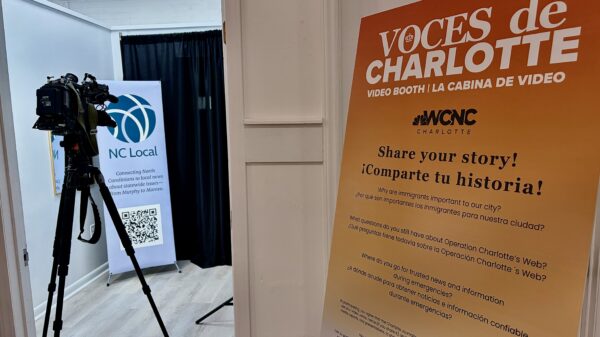
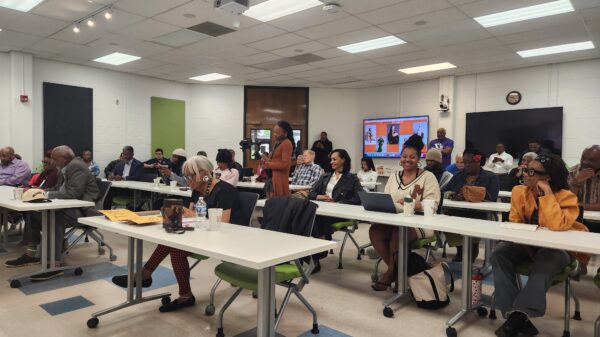
On April 9, communities across North Carolina came together to celebrate the inaugural Local News Day, highlighting the vital role of local journalism. News organizations that are part of the Charlotte Journalism Collaborative invited the public to a “News Cafe” at SouthPark Regional Library. These events were rooted in a shared goal: strengthening trust, deepening relationships, and building a more responsive local news ecosystem.
After years in local broadcast journalism, Koontz became an entrepreneur when he started Ken Koontz & Associates in 1983. It was the first Black-owned public relations agency in Charlotte. In 1985, he filed an application with the FCC to build and operate Channel 55 as a new station for the Charlotte-Rock Hill market. He has taught at JCSU, worked for NBC News, operated a satellite television production firm and in 2007, launched WENS-TV, a video production and programming company. He continues to work as a freelance writer and mentor young reporters every chance he gets.
Queens University News Service stories are prepared by students in the James L. Knight School of Communication with supervision and editing from faculty and staff. The James L. Knight School of Communication at Queens University of Charlotte provides the news service in support of local community news.